How I Treat
Sports Therapy Session
One focused, hands-on session for a body that’s working hard.
Not everything that bothers an athlete needs a course of care. Sometimes it’s the hip that’s been grumbling since a long weekend, the calf that tightens every time you pick up the pace, or the shoulder that’s simply had a heavy training block. You don’t need a whole rehab program for that. You need someone with good hands and a working understanding of training loads to spend an hour on it.
That’s this session.
What happens
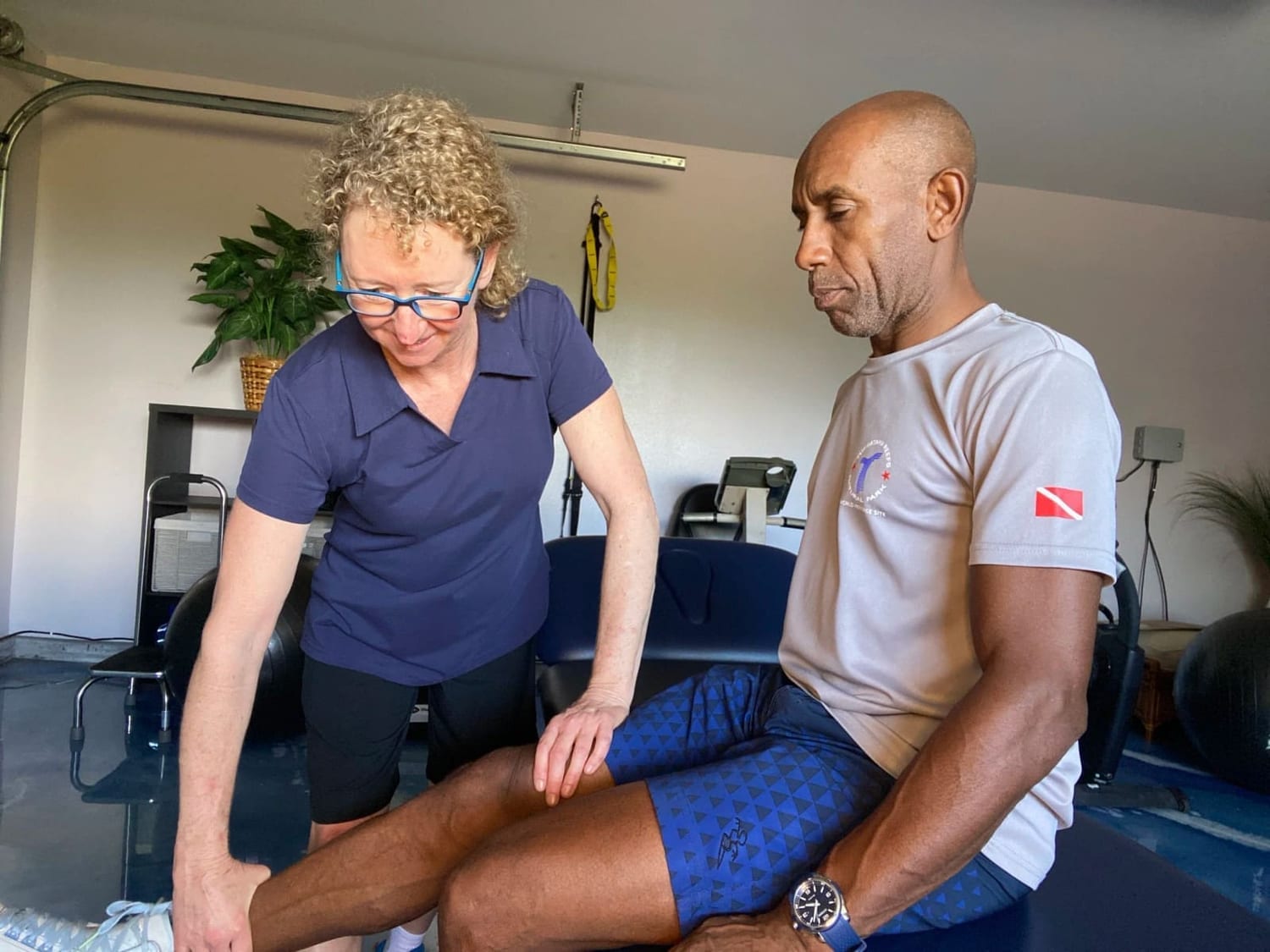
A quick, focused assessment. What’s bothering you, what you’ve been asking of your body lately, and what I find when I put hands on the area and watch you move it. Enough to treat well — not a full evaluation.
Hands-on treatment. Chosen for what I find, and drawn from everything in my toolbox: soft-tissue and myofascial work, cupping (also called myofascial decompression), joint mobilization, trigger point work, manual assisted stretching, and neurodynamic — nerve gliding — techniques when they fit the picture. What hands-on work like this does best is short-term relief and easier movement (opens in a new tab), which is exactly what this session is for.
Making it hold. A change that only lasts until you next train isn’t worth much. We finish with the activation, cueing, or taping aimed at helping you hold the new range instead of handing it straight back.
A plan for the coming week. What to do, what to back off, and what to watch for — in terms of your actual training, not generic advice.
This session is for you if:
- Something is nagging but not stopping you, and you’d rather deal with it now
- You’re mid-training-block and want to keep training while it settles
- You have an event coming up and want to arrive loose and ready
- You’ve just finished a race, tournament, or big week and want to recover well
- You’re visiting the Big Island and want to stay on top of an old issue while you’re here
When this isn’t the right session
I’d rather tell you honestly. If the injury is new and getting worse, if you can’t put weight on it, if it’s something you’ve limped through for months, or if you’re coming back from surgery, one session won’t do it justice. That calls for a full evaluation and a proper course of care — which is what my Sports Injuries & Running Form Analysis (opens in a new tab) page describes. A new injury you can’t put weight on, or one with numbness, fever, or swelling that won’t settle, should be looked at by your physician first. A free phone consultation is the easiest way to work out which of the two you need — send me a note (opens in a new tab) or call, and we’ll sort it out in a few minutes.
And if running is your sport and the same ache keeps arriving at the same mileage, treating the sore spot only buys you time. A Running Analysis (opens in a new tab) is the session that looks for why it keeps coming back.
Serving athletes and active adults in Waikoloa Village and along the Kohala Coast. Questions? Call or text Carolyn at (808) 289-0601.
Disclaimer: The information provided here is for general informational purposes only and is not a substitute for professional medical advice, diagnosis, or treatment. Always consult with a licensed healthcare provider or Physical Therapist before making changes to your diet, exercise routine, or supplement regimen. If you experience any pain, discomfort, or adverse effects while following any of the suggestions mentioned, discontinue immediately and seek professional guidance. Your health and safety are our top priorities.