
What I Treat
Low Back Pain
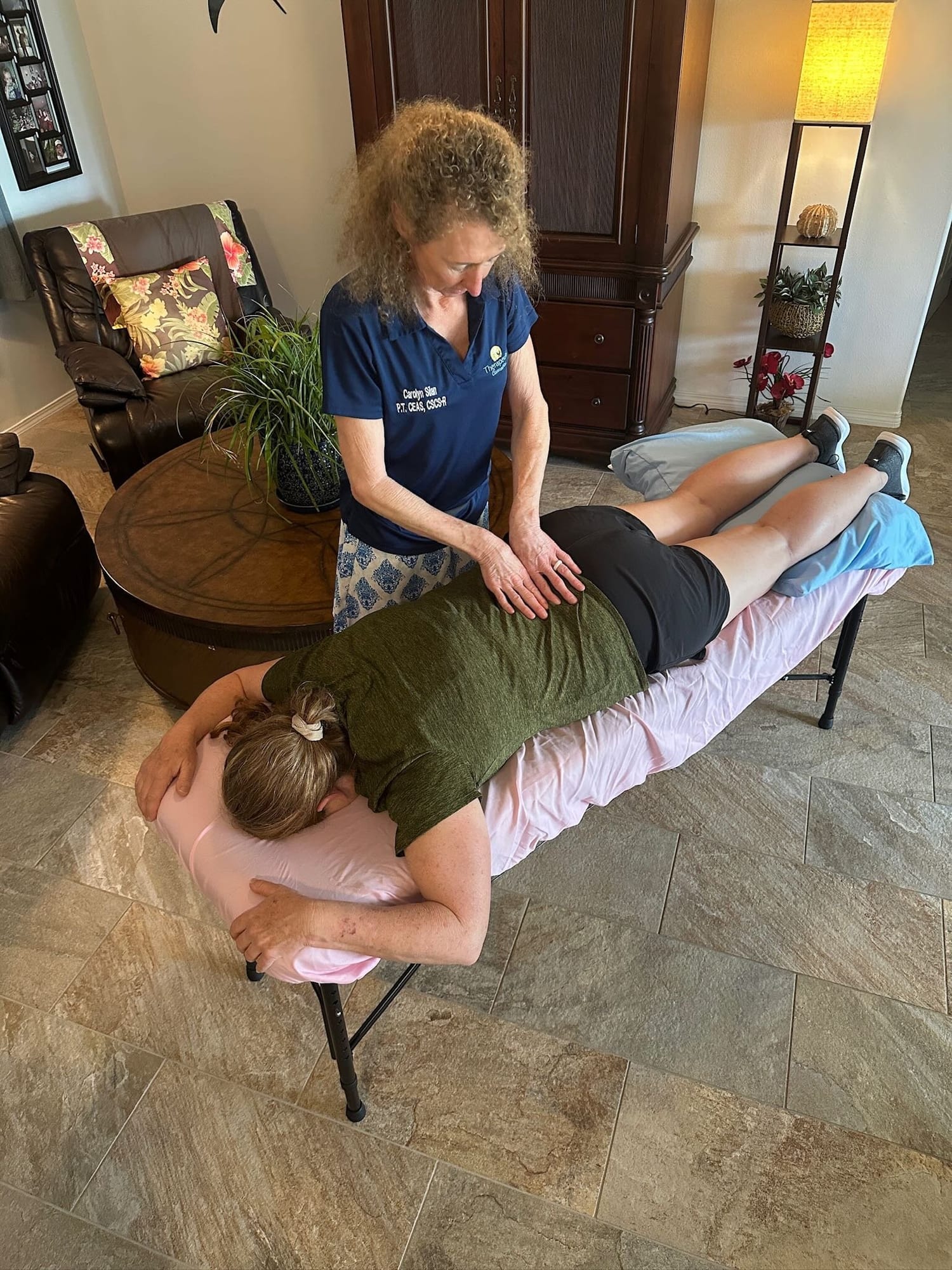
Low back pain is one of the most common reasons people come to see me, and one of the trickiest to sort out. Most of us will have an episode at some point, and yet no two of them are quite the same. The ache that shows up after a weekend in the garden isn’t the same problem as the one that’s been building quietly for years.
That matters more than most people realize, because the cause is what shapes the treatment. Two people can describe their pain in almost identical words and need completely different care. So before anything else, I want to know which one we’re dealing with.
The many causes
What follows is general information to help you understand your options — not a way to diagnose yourself. These causes overlap, several of them can feel remarkably similar, and often the exact cause of low back pain can’t be pinned to one structure at all (opens in a new tab). Sorting that out is what a hands-on evaluation is for. The reassuring part is that most back problems do get better over time.
Some back pain, though, needs your physician rather than an appointment with me. Please get medical attention right away if you have numbness, loss of movement, weakness, changes in bowel or bladder control, or severe back pain that doesn’t go away (opens in a new tab).
- Muscle and soft-tissue strain — lifting, twisting, a long day of unaccustomed work, or simply the same repeated motion over and over can leave muscles and fascia irritated and guarded. It can hurt a great deal, and it often settles as the tissue calms down.
- Facet joint irritation — the small paired joints at the back of each level of your spine can become inflamed or arthritic. This kind of pain often feels worse when you lean backward or stand for a long stretch, and eases when you bend forward.
- The sacroiliac joint — where your pelvis meets the base of your spine. People often point to it with one finger, low and off to one side, and notice it most when rolling over in bed, climbing stairs, or getting out of the car.
- Disc-related pain — a disc can bulge and press on a nerve nearby, which is one source of pain, numbness, or tingling down the leg. It can be miserable when it truly is the source — but disc bulges and similar changes turn up on imaging in large numbers of people who have no pain at all (opens in a new tab), so, as you’ll read below, that’s a bigger if than most people are told.
- Spinal stenosis — a narrowing of the spaces where the nerves travel, more common as we get older. This one is diagnosed by your physician, using an examination and imaging (opens in a new tab) — making that diagnosis and reading imaging aren’t things I do as a Physical Therapist. The familiar pattern is legs that feel heavy or achy with standing and walking, easing when you sit or lean forward (opens in a new tab). Physical Therapy is one of the standard non-surgical parts of care, and may help you stay more comfortable and keep walking.
- Movement patterns and postural habits — how you bend, sit, stand, and lift loads your back over and over, all day long. When some muscles quit working and stronger ones take over, that load lands in the same few places, day after day, and tissue eventually complains. This is the layer I spend the most time in — see Movement Impairment Syndromes (opens in a new tab).
- Pain referred from the hip, or from the way you walk — sometimes the low back isn’t the source at all. A stiff or weak hip, or a gait pattern that asks your back to do the hip’s job, can keep a low back sore for a long stretch while the back itself isn’t the problem.
Frequently it’s more than one of these at once, layered together, and sorting out which layers are actually driving your pain is exactly what an evaluation is for. One cause, though, gets more attention than all the rest combined.
What a bulging disc really means
True bulging disc pain is rare but can be miserable when it occurs. This is because a bulging disc can press on the nerve that exits from your spinal cord and travels very near the disc that usually sits between two of your vertebrae. It can happen in your neck or your low back (and, rarely, in your mid-back).
When it occurs in the low back, it is often after bending forward, reaching out for a load, and twisting at the spine — your disc bulges out from the fibrous casing that surrounds it. Sometimes a disc can herniate after traumatic compressive forces, and sometimes it’s due to the repeated wear and tear of heavy labor or even gardening.
No matter the origin, if you have a bulging disc you may be miserable, or you may not feel anything at all. For the most part, bulging discs are a normal part of life — people with absolutely no low back pain have been shown to have bulging discs on MRI studies, and studies have shown that the protruding portion can retract back in.
The good news for those in pain from a bulging disc is that Physical Therapy can usually alleviate the symptoms! Often, mechanical lumbar or cervical traction, promoting engagement of your body’s “natural corset” musculature, addressing muscles that have shortened over time, and a handful of other techniques can relieve the severe nerve pain caused by a bulging disc.
Disclaimer: The information provided here is for general informational purposes only and is not a substitute for professional medical advice, diagnosis, or treatment. Always consult with a licensed healthcare provider or Physical Therapist before making changes to your diet, exercise routine, or supplement regimen. If you experience any pain, discomfort, or adverse effects while following any of the suggestions mentioned, discontinue immediately and seek professional guidance. Your health and safety are our top priorities.
Schedule this appointment
New here? Fill out the New Client Intake Form (opens in a new tab) before your first visit, so Carolyn knows your history before you arrive.