
How I Treat
Running Analysis
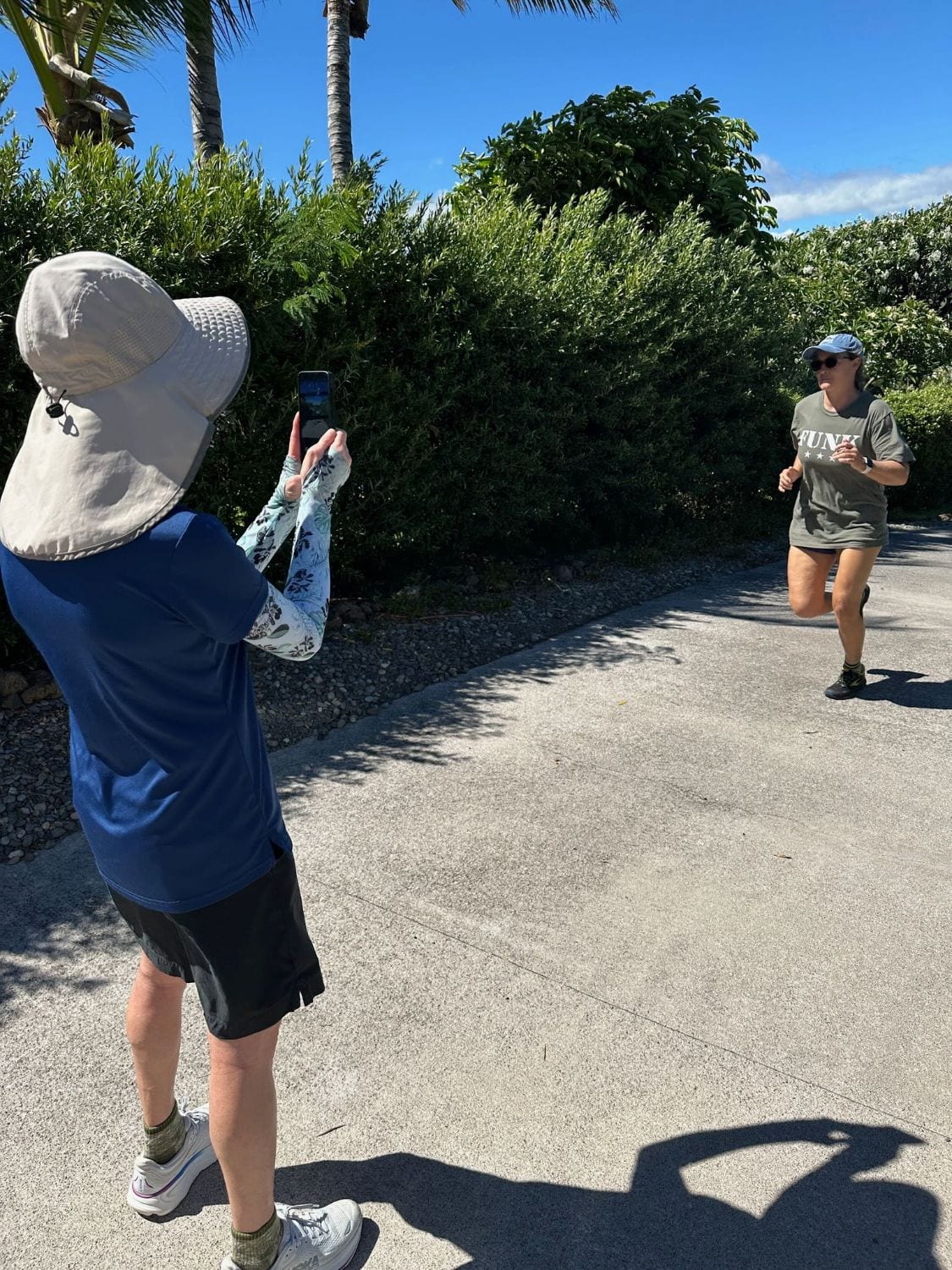
One session, devoted entirely to how you move when you run.
Most runners who come to me have already tried the obvious things — new shoes, more stretching, a couple of weeks off. The ache quiets down, and then it shows up again at the same mileage. When that pattern repeats, the tissue that hurts often isn’t the whole story. How load travels through your body every time your foot meets the ground can be a big part of it — small changes in running mechanics, such as a slightly quicker cadence, measurably change how much load the hips and knees take (opens in a new tab).
A Running Analysis is a session built around that question. It isn’t a workout and it isn’t a general rehab visit. It’s a careful look at your mechanics with a Physical Therapist who is also a Certified Strength and Conditioning Specialist — so what you hear afterward is about training and load, not just about what’s sore.
What happens in the session
We talk first. Your running history, your current mileage and terrain, your shoes, old injuries, and what you’re training for. Context changes how I read everything that follows.
I assess you off your feet. Joint mobility, strength, flexibility, and tissue quality in your feet, ankles, knees, hips, and trunk. These are the quiet limits on what your stride is able to do.
Then I watch you run. Foot strike, cadence, trunk and pelvis control, what your knee and hip do through stance, arm carriage, and how evenly you work side to side.
We test changes on the spot. A cue, a slightly quicker cadence, a change in posture — you feel the difference while I watch what it does to the pattern. That live feedback loop is the heart of the session.
What you walk away with
- A plain-language explanation of what your stride is doing, and where load may be piling up
- Two or three specific cues or drills to practice — chosen because they changed something for you in the session, not pulled off a generic list
- Strength and mobility homework aimed at the limitation we actually found
- A straight answer about what’s reasonable for your training in the coming weeks, and whether what you’re dealing with would be better served by a full course of care — or by a visit to your physician
This session is for you if:
- You keep getting the same ache at the same point in your training
- You’re coming back from an injury and don’t want to repeat whatever caused it
- You’re building toward a race and want your form working for you instead of against you
- You’re new to running, or returning after years away, and want to start well
- You intend to still be running in your seventies and eighties
Every runner’s body is different, so there’s no template here. A cue that transforms your stride may be exactly the one I’d tell the next runner to ignore.
How this fits with my other services
If you’re currently hurting and need treatment as well as analysis, start with Sports Injuries & Running Form Analysis (opens in a new tab) — that page covers the bigger rehab picture, including what I treat and how return-to-sport progression works. If you’d like hands-on work in the same week as your analysis, a Sports Therapy Session (opens in a new tab) pairs naturally with it.
Serving runners in Waikoloa Village and along the Kohala Coast. Questions? Call or text Carolyn at (808) 289-0601.
Disclaimer: The information provided here is for general informational purposes only and is not a substitute for professional medical advice, diagnosis, or treatment. Always consult with a licensed healthcare provider or Physical Therapist before making changes to your diet, exercise routine, or supplement regimen. If you experience any pain, discomfort, or adverse effects while following any of the suggestions mentioned, discontinue immediately and seek professional guidance. Your health and safety are our top priorities.